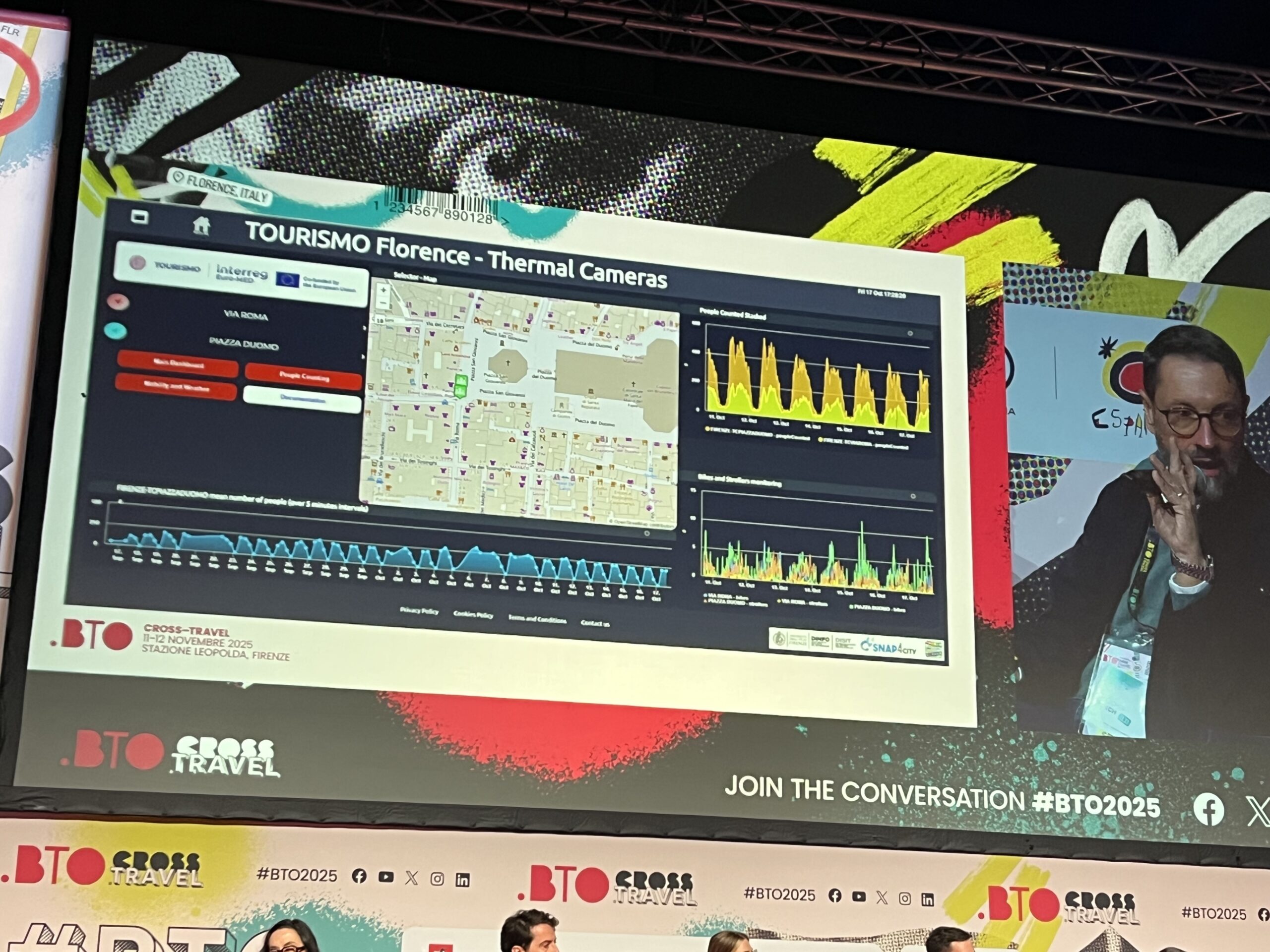

Florence offered a lively stage for TOURISMO this week, as the project was presented in the Smart Florence session at BTO. For the past 17 years, Be Travel Onlife has been the reference event in Italy on Digital Tourism, Innovation and Training. Gathered at Stazione Leopolda on November 11–12, the session drew operators, researchers, policymakers, and a wide range of professionals who influence how destinations respond to rising visitor pressure. The setting proved well suited to TOURISMO’s objectives, giving the project direct exposure to actors engaged in the complexities of contemporary tourism management.
Dr. Alessandro Monti of Fondazione per la Ricerca e l’Innovazione (FRI), delivered the presentation on behalf of TOURISMO, outlining the pilot currently under way in Florence. The city is testing a focused sensor network designed to capture movement patterns in a precise and privacy-conscious manner. Two thermal cameras register presence in key areas, while six sniffers detect anonymous signals from mobile devices. These data streams feed into Snap4City, the platform developed by the DISIT Lab at the University of Florence. The platform analyses and visualises the information, identifies frequently used routes, and generates early predictive scenarios that can support authorities in planning and decision-making.
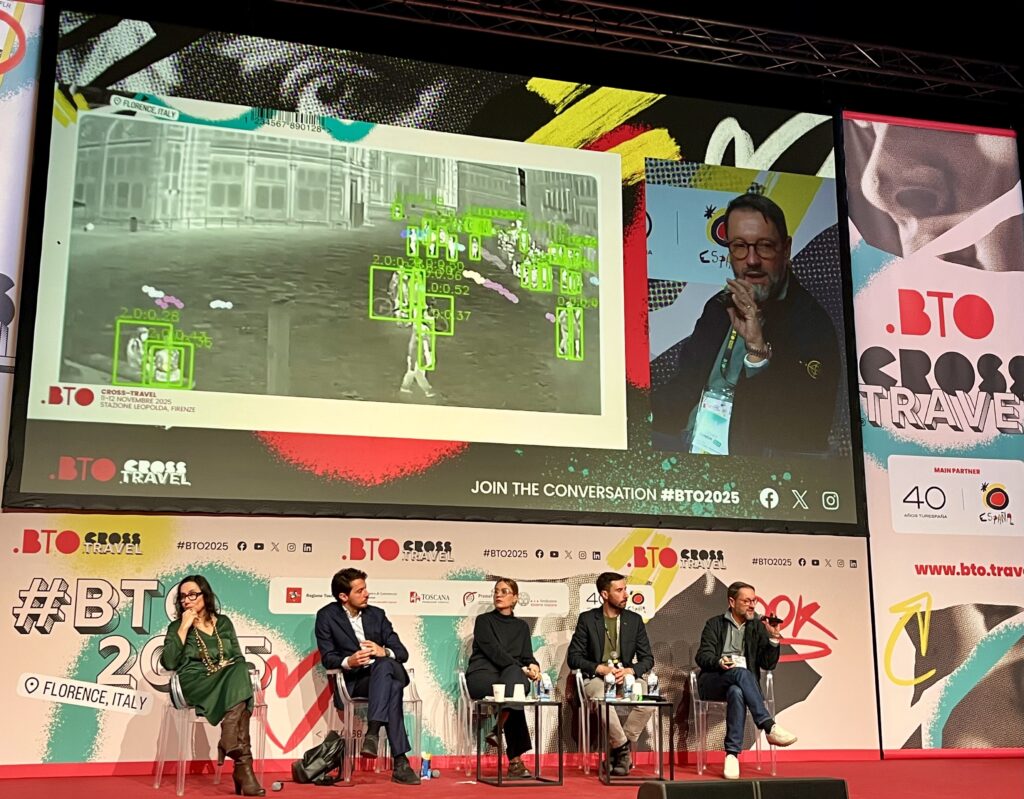
Although the system appears straightforward, its implications are wide-ranging. Better insight into where crowds form, how they move, and when pressure intensifies can enable earlier and more effective interventions. City services can adjust mobility routes or issue timely guidance to operators in sensitive zones. According to the project’s framing, these capabilities are essential in a sector that often struggles to keep pace with dynamic visitor trends.
Privacy concerns were raised during the discussion. The response highlighted that EU regulation is embedded into the system’s design, including alignment with requirements set out in the new AI Act. This point was significant for an audience familiar with the challenges of responsible data use, and it appeared to strengthen engagement with the project’s approach.
Interest continued after the session. Several attendees reportedly approached the speaker with proposals and questions, including opportunities for replication in other Italian destinations and comparisons with pilots already under development elsewhere. These conversations suggested a growing appetite for coordinated solutions that address recurring stress points in tourist-heavy areas.
The broader BTO environment added further momentum. The event’s mix of expo elements, expert talks, and technical debates fosters rapid exchange and reflection. Within that context, TOURISMO secured meaningful visibility. The presentation illustrated what is being tested on the ground in Florence and pointed to a wider potential once cities share data, align tools, and approach tourism pressures with a more integrated strategy.