
Managing tourism flows sustainably requires reliable information, the skills to interpret it and cooperation among the people responsible for local decisions. TOURISMO brings these elements together to help Mediterranean destinations respond to tourism pressures and support the adoption of smarter management practices.
The project identifies a central challenge:
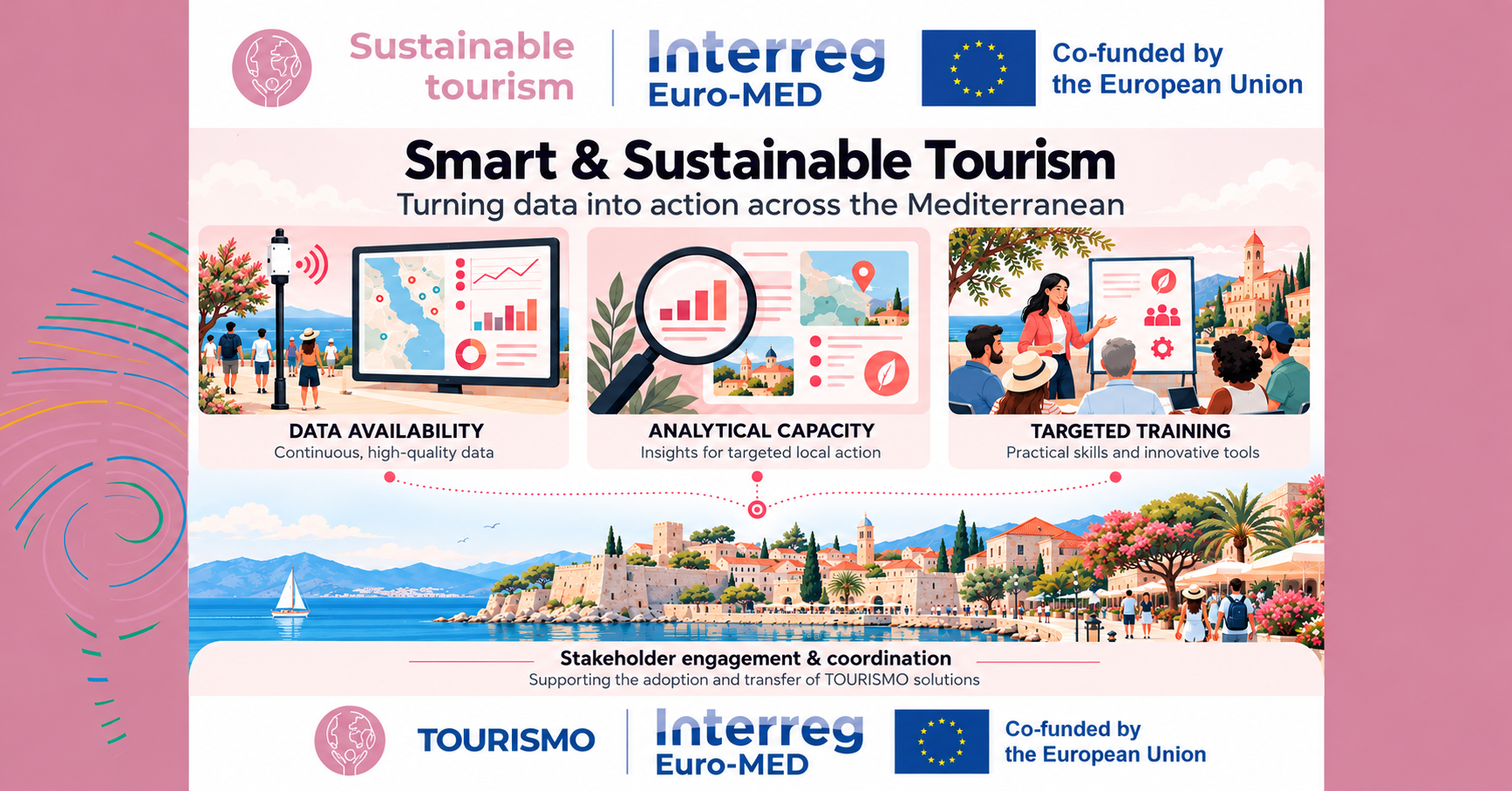
«The main challenge is to secure stakeholder engagement and coordination for the adoption and transfer of TOURISMO’s solutions. This requires data availability, the capacity to generate and analyse information to guide local interventions, and targeted training to equip stakeholders with the skills to apply the relevant methodologies and technologies.»
To address this challenge, TOURISMO’s approach builds on three closely connected pillars: data availability, analytical capacity and targeted training.
Data availability: Understanding tourism flows
Access to continuous, high-quality data helps destinations understand how visitors move, where pressures concentrate and how patterns change over time. This evidence provides a foundation for identifying local needs and planning appropriate responses.
TOURISMO promotes the use of tourism flow information to support informed decisions, helping local stakeholders move from general observations towards a clearer understanding of conditions in their destinations.
Analytical capacity: Translating information into local interventions
Collecting data is only the first step. Destinations also need the capacity to interpret information and turn findings into practical action.
By strengthening analytical capacity, TOURISMO helps stakeholders use evidence to identify priorities, assess possible interventions and guide tourism management. The aim is to connect insights with local needs, supporting measures that balance the visitor experience with the protection of heritage, the environment and residents’ quality of life.
Targeted training: Building the skills for lasting uptake
Effective adoption depends on people who can confidently apply the relevant tools and methodologies. Targeted training equips stakeholders with practical skills to understand data, use innovative approaches and integrate findings into their everyday work.
Capacity building also creates opportunities for dialogue and shared learning, helping authorities, tourism businesses and other local actors develop a common understanding of challenges and coordinate their responses.
From pilot experience to wider application
As TOURISMO advances through its transfer phase, these three pillars provide a foundation for adapting the project’s experience to new territories. Successful transfer requires attention to each destination’s needs, available data, institutional capacity and stakeholder relationships.
By combining reliable information, analytical skills and practical training, TOURISMO supports the uptake of its solutions and strengthens cooperation for smarter, more sustainable tourism across the Mediterranean.