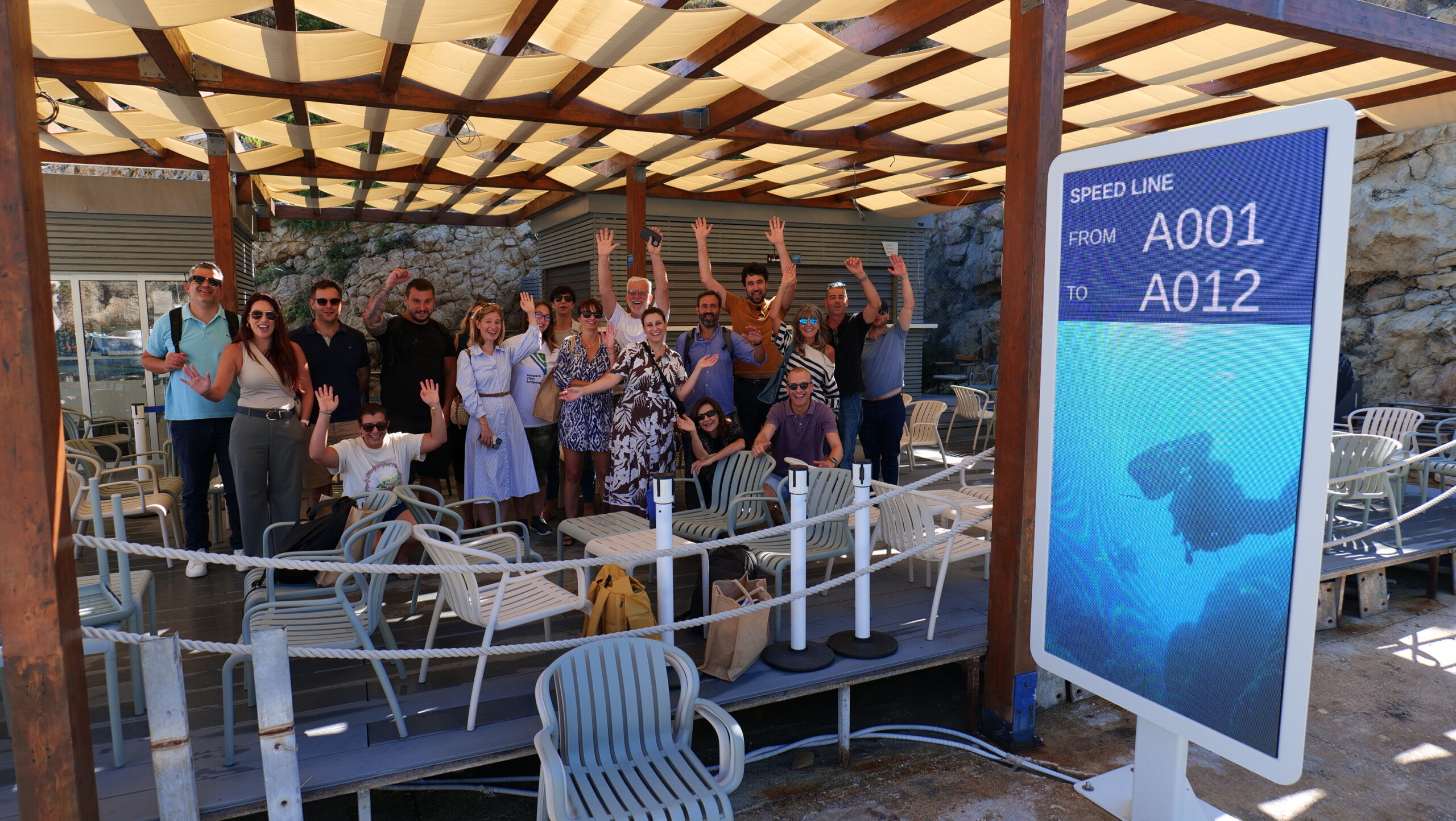

How can destinations manage increasing visitor numbers while preserving their natural assets and the quality of life of local communities? This question was at the core of the “Local Engagement Workshops with Public Authorities and DMOs of Island Vis”, held in Komiža, Croatia as part of the TOURISMO project.
The workshop brought together representatives of public authorities and Destination Management Organisations (DMOs), fostering dialogue on sustainable tourism management in one of Croatia’s most sensitive island environments. Organised by JU RERA S.D., the event was implemented within the framework of the TOURISMO – Tourism Innovative and Sustainable Management of Flows project, co-funded by the Interreg Euro-MED Programme 2021–2027.
A growing pressure on a unique natural site
Discussions focused on the Blue Cave on the island of Biševo, one of the Adriatic’s most iconic natural attractions. While its popularity has significantly contributed to the region’s visibility, it has also introduced increasing pressure on the site.
Over the past decade, the number of visitors has grown by more than 300%, rising from approximately 49,000 in 2014 to over 160,000 in 2024. In 2025 alone, the site recorded more than 146,000 visitors.
A key challenge lies in the high share of day visitors, with ratios showing that visits to the Blue Cave significantly exceed the number of tourist arrivals and overnight stays in Komiža. This trend results in a strong concentration of visitors in a limited area, particularly during peak summer months.
Such patterns contribute to congestion, environmental pressure, and a decline in the overall visitor experience—highlighting the broader phenomenon of overtourism.
From data to action: testing solutions on Biševo
In response, the TOURISMO project is implementing pilot actions on Biševo aimed at improving the management of visitor flows through data-driven and technological solutions.
These actions include:
- real-time monitoring of visitor numbers
- collection of environmental data (temperature, wind, wave conditions)
- analysis of visitormovementpatterns
- upgrades to the ticketing system to better regulate flows
The objective is not to limit tourism, but to manage it more effectively—reducing pressure on the most visited sites while encouraging a more balanced distribution of visitors across the destination.
The Visitor Centre on Biševo plays a key role in this approach, serving as a central point for informing and guiding visitors.
Engaging local stakeholders for sustainable solutions
The workshop provided a platform for open discussion among stakeholders, addressing the challenges and opportunities of tourism management in the Vis archipelago.
Participants highlighted the importance of:
- defining destination carrying capacity
- improving planning and governance
- using digital tools for informed decision-making
- actively involving local communities
The conclusion was clear: ensuring the long-term sustainability of destinations like Vis requires coordinated action, data-based management, and a shared vision among all stakeholders.
The TOURISMO project, implemented across eight pilot sites in the Mediterranean, aims to develop and test innovative solutions that help destinations remain both attractive and sustainable